
2026-03-01
Motion Identity Is the New Brand System
Why static guidelines are not enough — and how to build motion rules your product, social, and film teams can share.
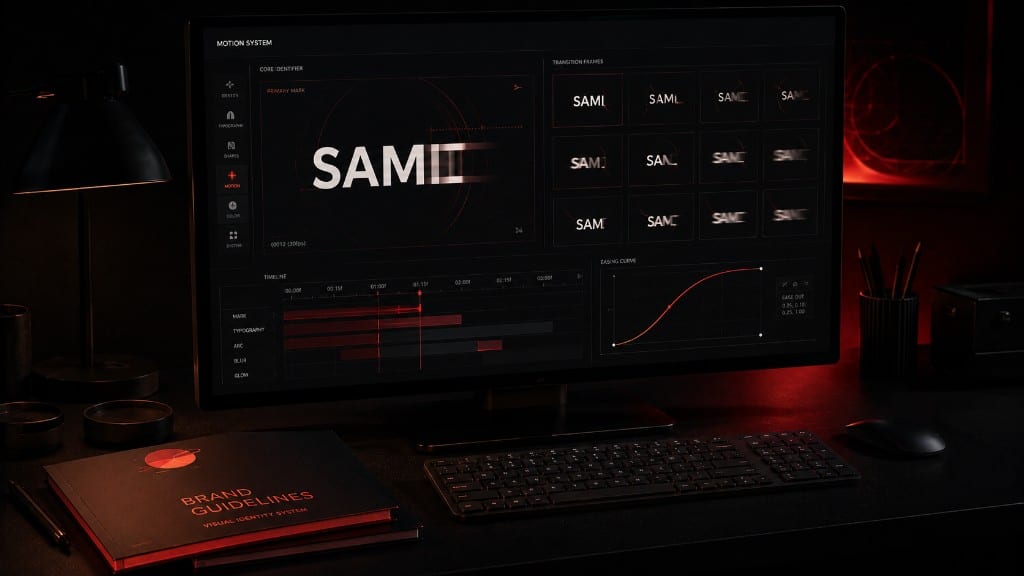
A modern brand system is incomplete if it only describes stillness. Logos, colors, typography, and spacing are necessary, but they do not tell a product team how a screen should transition, a social team how a headline should enter, or a film editor how the brand should breathe between scenes.
Motion identity is the new shared layer. It turns brand personality into time, rhythm, reaction, and behavior.
Static rules do not travel far enough
Most teams already create motion every day. App states animate. Stories cut. Reels open. Product explainers use transitions. Event screens loop. The problem is that these decisions are often made separately by different editors, designers, and vendors.
Without motion rules, every channel quietly invents its own version of the brand. One feels premium, one feels playful, one feels like a template, and the audience experiences the inconsistency even if they never name it.
The shared motion language
A useful motion system defines entry behavior, transition logic, pacing, easing, hold time, typography movement, sound response, and rules for when the brand should be still. It should be simple enough for teams to use and specific enough to prevent generic output.
The point is not to animate everything. The point is to make movement intentional. A brand that knows how it moves becomes easier to recognize across product, social, film, and live environments.