
2026-02-04
The End of the Mood Board: How We Replaced Concept Presentations With Working Prototypes
In an AI-native studio, clients do not need to imagine the idea from borrowed references. They can judge a working prototype.
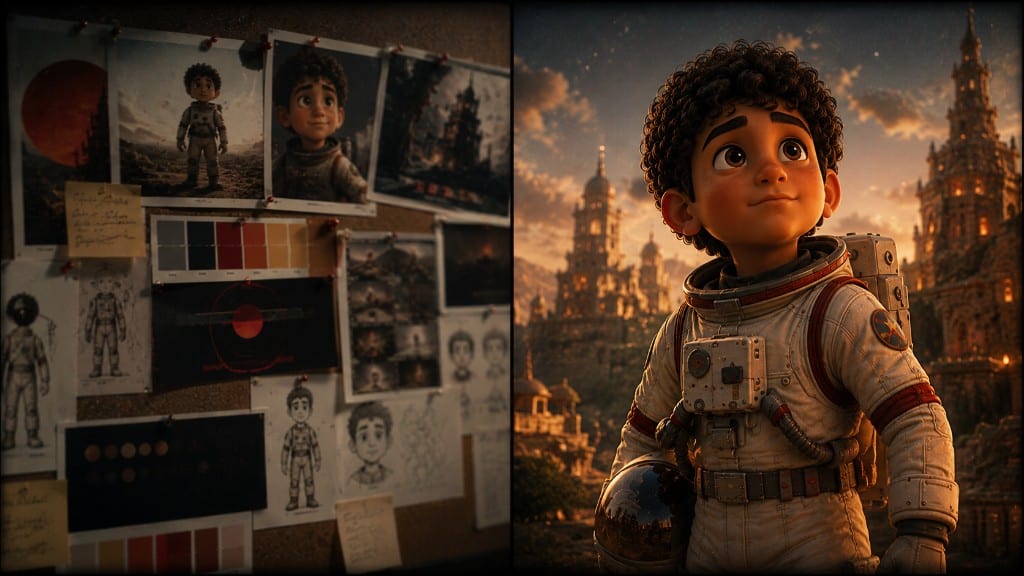
The mood board was the creative industry's way of borrowing trust. Here is a reference image that is not ours. Here is a color palette from somewhere else. Here is a type treatment that sort of points toward what we mean. For years, that was the best available bridge between idea and production.
AI-native production changes the bridge. We no longer need to ask clients to imagine the idea entirely from references. We can show a working prototype: a 60-second animatic, a character sheet, a motion identity demo, a scripted social system, or a rough scene that proves the creative behavior.
Less interpretation, faster alignment
A prototype moves the discussion from taste abstraction to production truth. Instead of debating whether a reference feels premium, the client can judge whether the actual motion, character, copy, and pacing feel right for the brand. The feedback becomes sharper because the artifact is closer to the thing being bought.
It also reduces revision cycles. Many revisions are not creative disagreements; they are interpretation gaps. The client imagined one thing from the deck, the team meant another, and production reveals the difference too late. A prototype exposes that gap early.
What minimum viable prototype means
For an animation pilot, it means a character sheet, a sample scene, voice direction, and a short animatic that proves timing. For a brand identity, it means a logo in motion, a social open, a product transition, and a title system. For a social content system, it means one strategic brief translated into a reusable template and several real content variants.
The prototype does not have to be final. It has to be honest. It should show the creative bet clearly enough that everyone can decide whether to build the full system.