
2023-02-07
Content Velocity Is Breaking MENA Creative Teams - Here's What We Do Instead
The pressure is not just more posts and more formats. It is the absence of a production system that can turn one strategic idea into many useful assets.
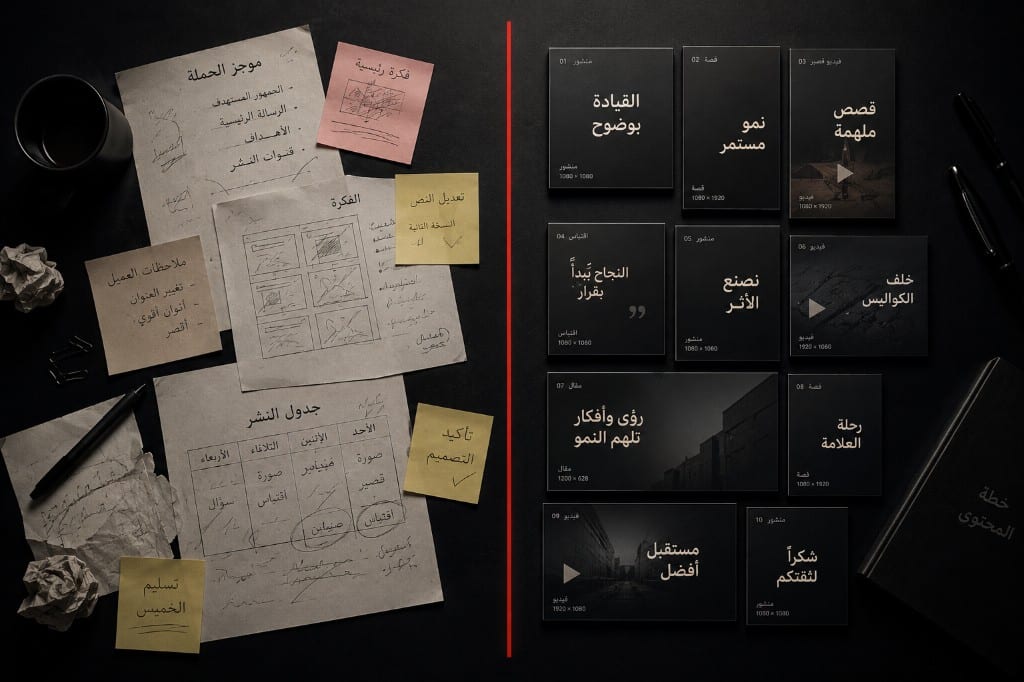
The Gulf content calendar can feel like it is always accelerating. Thirty posts a week. Five video formats for one campaign. A Ramadan push that starts before the last one has been debriefed. A client asking for "just a quick version" in every platform ratio, every dialect, and every media placement.
The obvious diagnosis is that teams need to work faster. The truer diagnosis is that many brands are still buying output instead of systems. They brief a post, receive a post, revise a post, publish a post, and then start again from zero the next morning.
One brief should not equal one asset
At Blendance, we started treating the brief as a production seed. A strong brief should contain enough structure to generate variants without losing the idea. That means modular scripts, reusable motion templates, aspect-ratio logic, audience tiers, and clear rules for what can change without breaking the campaign.
The operating model looks more like this: one brief becomes one master message, two audience angles, two copy lengths, one hero film, three social cuts, a motion story template, and a still frame system. The work still needs taste. It just does not need to be reinvented every time.
- One strategic brief feeds the master narrative.
- The master narrative splits into hero, proof, reminder, and response assets.
- Each asset inherits motion, copy, and design rules from the same source.
- The team spends its energy directing quality, not rebuilding the setup.
Velocity without collapse
A content operating system is not a spreadsheet with deadlines. It is a creative production architecture. It defines what is reusable, what must be bespoke, where approvals happen, and how a campaign can scale across formats without becoming visually and verbally fragmented.
This is how teams survive the calendar without flattening the brand. They stop asking, "How do we make more posts?" and start asking, "What system lets one idea travel further without losing its shape?"